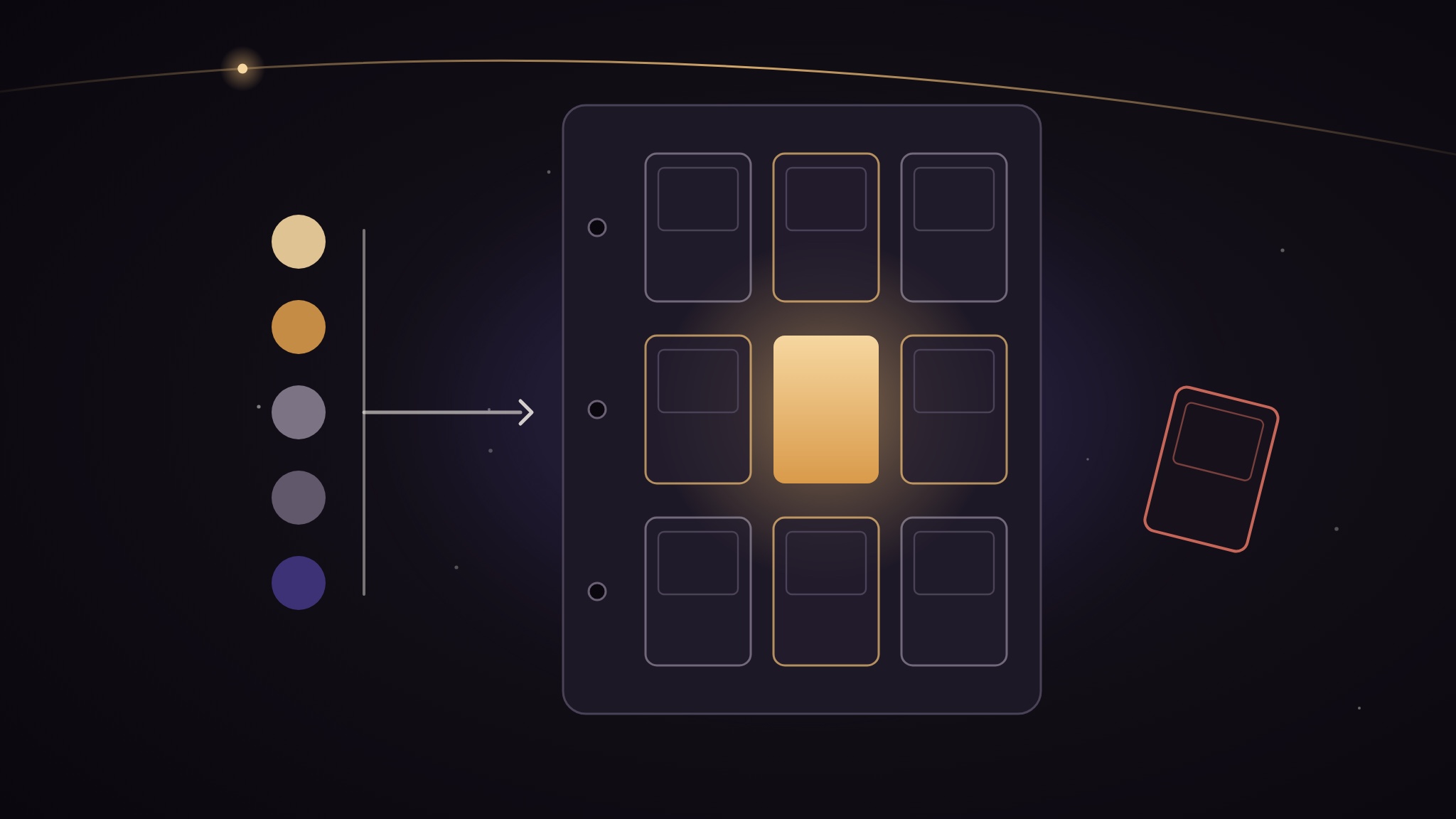
I rejected the hand-built binder pages for the new Pokémon set. They were slow to make and none of them hung together. So the pages on Binderdex, my Pokémon card collection and price app, now make themselves, and a colour gate decides which ideas survive.
These pages are Binderdex's binder ideas: a public gallery of themed 3x3 binder layouts, each built around one card. Collectors browse them for inspiration and can copy one as their own binder.
The generator reads a card's scan as a palette in OKLab, a colour space where distance tracks how different two colours look. Then it asks a vision model for page ideas plus the hex colours that would sit well next to the card. "Make it pretty" is useless as an instruction, so each suggestion is scored against measured harmony: tight colour coverage within a small distance budget, and no cluster that clashes. Ideas that fail the gate never reach a render.
Every rendered page comes back from a judge, a model that scores it, with a score from 0 to 100. A page at 80 or better ships. A lower score gets one retry with the clashing cards pulled out, and then I go back to the model for a fresh round of page ideas. The acceptance loop is short:
for (const idea of ideas) {
  const page = render(idea);
  const score = judge(page);
  if (score >= 80) return accept(page);
  // one retry, minus whatever the judge flagged
  const trimmed = dropClashingCards(idea);
  if (judge(render(trimmed)) >= 80) return accept(trimmed);
}
askModelForMoreIdeas();
Running this used to mean leaving my Mac on overnight. Now it's a GitHub Actions workflow with parallel shards (slices of the work that run at once), a hard time budget inside each session, and a merge job that folds the shards into one batch. If a run stops, the round's ideas persist and it picks up where it left off.
The takeaway: don't ask a model to design. Ask it to propose against a measured constraint. The OKLab gate turned taste into numbers a machine can check, and that separates pages a person has to vet from a batch I can trust.